Introduction
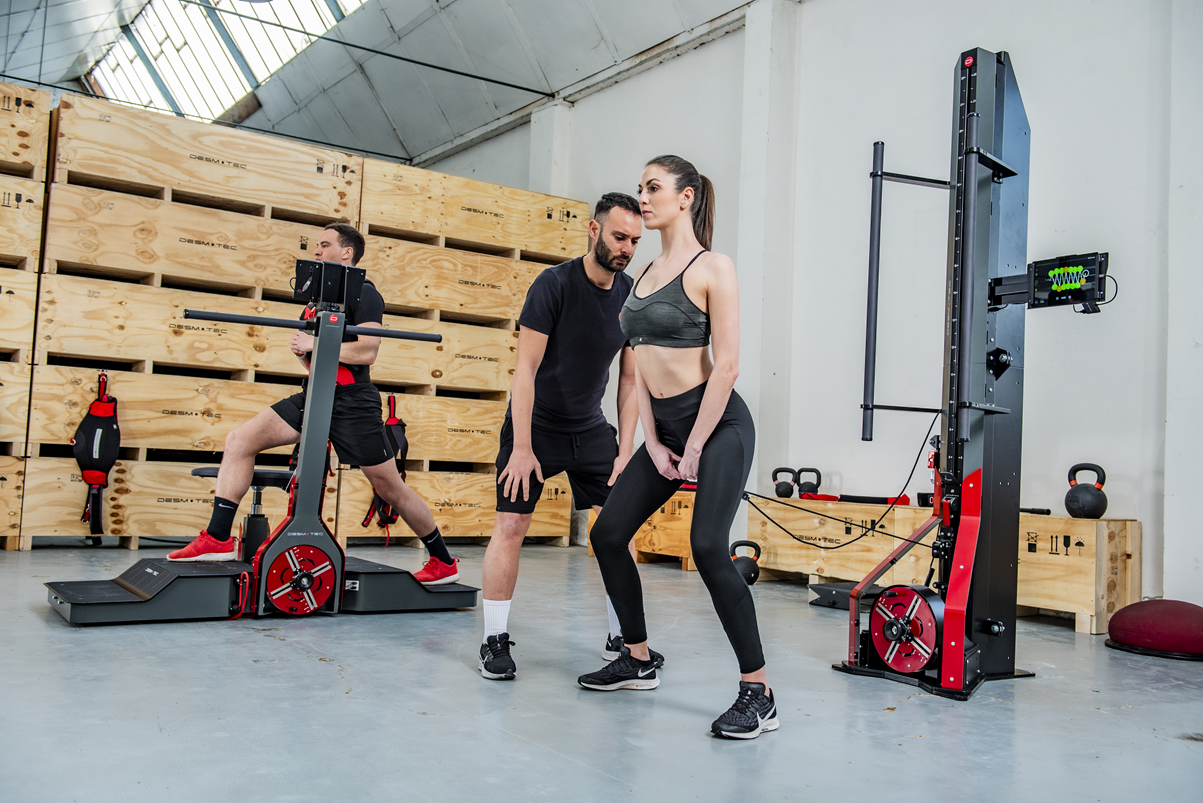
The frontal squat is one of the basic strength exercises, employed in numerous sports to develop the muscles of the lower limbs and back. The flywheel resistance variant gained popularity for its potential to increase eccentric stimulus, i.e. the phase in which the muscle lengthens under tension. This pilot study compares muscle activation during front squats performed with free weights and fly resistance, with the aim of assessing any differences in muscle activation patterns
Materials and methods
Eight healthy subjects (5 men and 3 women) underwent three operating conditions:
- Squats with free weights (20% of body weight)
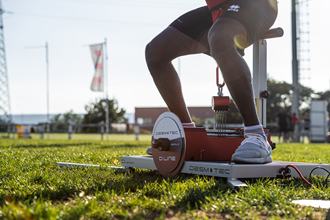
- Squat with fly resistance to a disc (D1)
- Squat with two disc flywheel resistance (D2)
During each performance, electromyographic activity (sEMG) of seven main muscles was recorded, both in the concentric phase (salt) and in the eccentric phase (descent)
Results
In the comparison between the different methods, resistance to flywheel showed greater muscle activation in almost all the muscles analysed, especially in the eccentric phase.
Eccentric phase: marked increases were observed especially in the sole, maximum gluteal and large medial. The spinal erector muscle (ES), on the other hand, showed a reduction in activity, suggesting a lower potential load on the spine during exercise with flywheel.
Concentric phase: the activity of the anterior tibial increased by more than 200% with D1 and D2 compared to free weights. The maximum gluteum showed an increase of up to 177% with D2. Wide medial and medial gastrocnemium also had significant increases.
Discussion
Exercise with flying resistance is confirmed as an effective stimulus for muscle development, in particular for eccentric enhancement, which is known to promote hypertrophy. Reduced activation of the spinal erector muscle could indicate increased executive safety, reducing the risk of spinal overload. This makes this kind of exercise interesting also for rehabilitation contexts or for athletes in early training.
Conclusion
The front squat with resistance to flywheel involves greater muscle activation than free weights, especially in the eccentric phase. Also, it does not increase the load on the spinal muscles, suggesting a good safety margin. Further studies are desirable to deepen the biomechanical and applicational impact of this training mode, in particular in rehabilitation
Discover the range of Desmotec devices designed with flywheel technology and start working more effectively and professionally today.
Go to Desmotec products