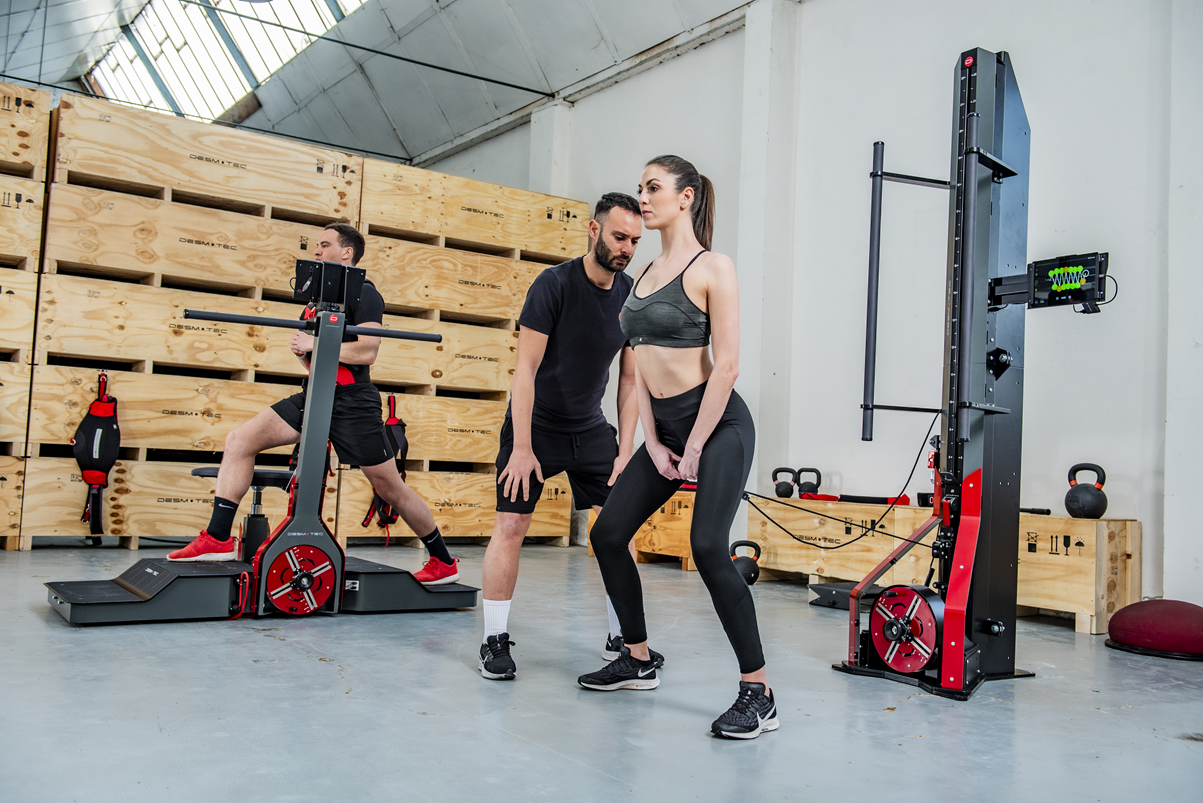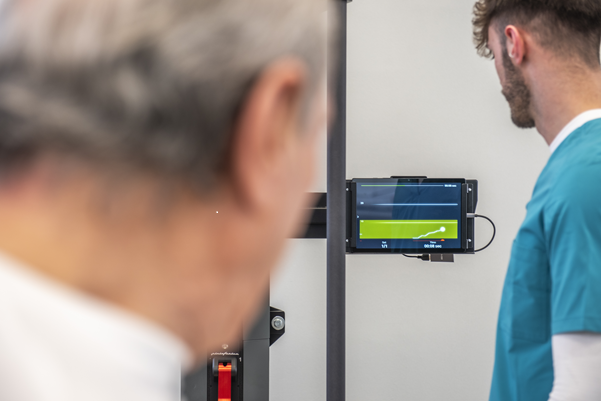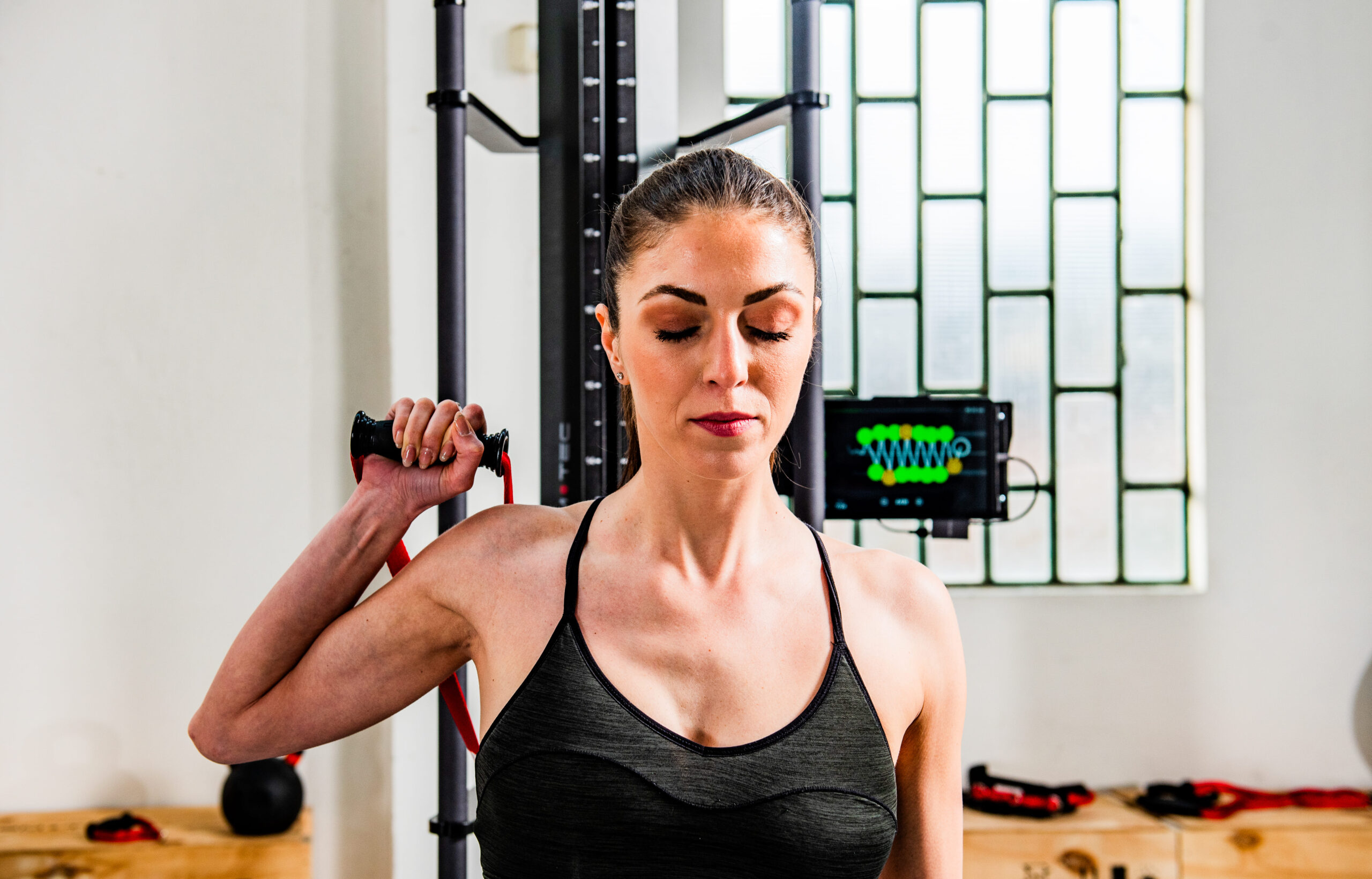
Strength and muscle power are key elements for athletic success in many sports disciplines. With the increase in the use of flywheel devices in strength training, it has become essential to understand how the strength level and body mass affect performance during exercises such as squat and split squat. The study conducted by Asencio et al. (2024) analysed the impact of relative strength level (1RM ratio/body mass) and type of exercise on concentric, eccentric power and eccentric overload (EOL).
Method and Participants
46 recreational athletes participated in the study with at least one year of experience in training with overloads but without experience in flywheel devices. After a phase of familiarization, athletes were divided into two groups according to relative strength: "stronger" (>1.5 1RM/BM) and "weaker" (<1.5 1RM/BM). Participants performed squat and split squat exercises with different inertial loads (from 0.025 to 0.1 kg)·m2), by performing eight-repeated maximum series.
Main Results
The results showed that subjects with greater strength obtain higher values of concentric power and eccentric overload, especially with light loads. In addition, lower loads (0.025–0.05 kg)·m2) generate greater concentric power, regardless of strength level. As for the split squat, both groups get higher EOLs with higher loads.
An interesting aspect is that in the strongest group, the increase in the load did not lead to significant changes in the EOL in the squat, suggesting greater eccentric control capacity. On the contrary, in the weaker group, the EOL increased as the load grew, indicating a less efficient response to lighter stimuli
Practical implications
To maximize the effects of flywheel training, it is essential to customize the load according to the athlete’s strength profile. The strongest athletes can get an effective eccentric overload with any load, while the least strong ones need higher loads to adequately stimulate the eccentric phase. Moreover, if the objective is to maximize concentric power, it is preferable to use lighter loads.
Another implication is the use of unilateral exercises: require greater familiarisation, especially for the non-dominant leg, but offer an interesting and potentially more functional activation profile in specific sports contexts.
Conclusion
The study shows that muscle power during exercises with flywheel is strongly influenced by relative strength level and type of exercise. Customizing training protocols based on these factors can optimize results and improve athletic performance. For this reason, it is recommended that athletic trainers test the power-load profile for each exercise, carefully considering the level of strength of the athlete in the choice of load and mode of execution (bilateral vs unilateral).
Discover the range of Desmotec devices designed with flywheel technology and start working more effectively and professionally today.
Go to Desmotec products